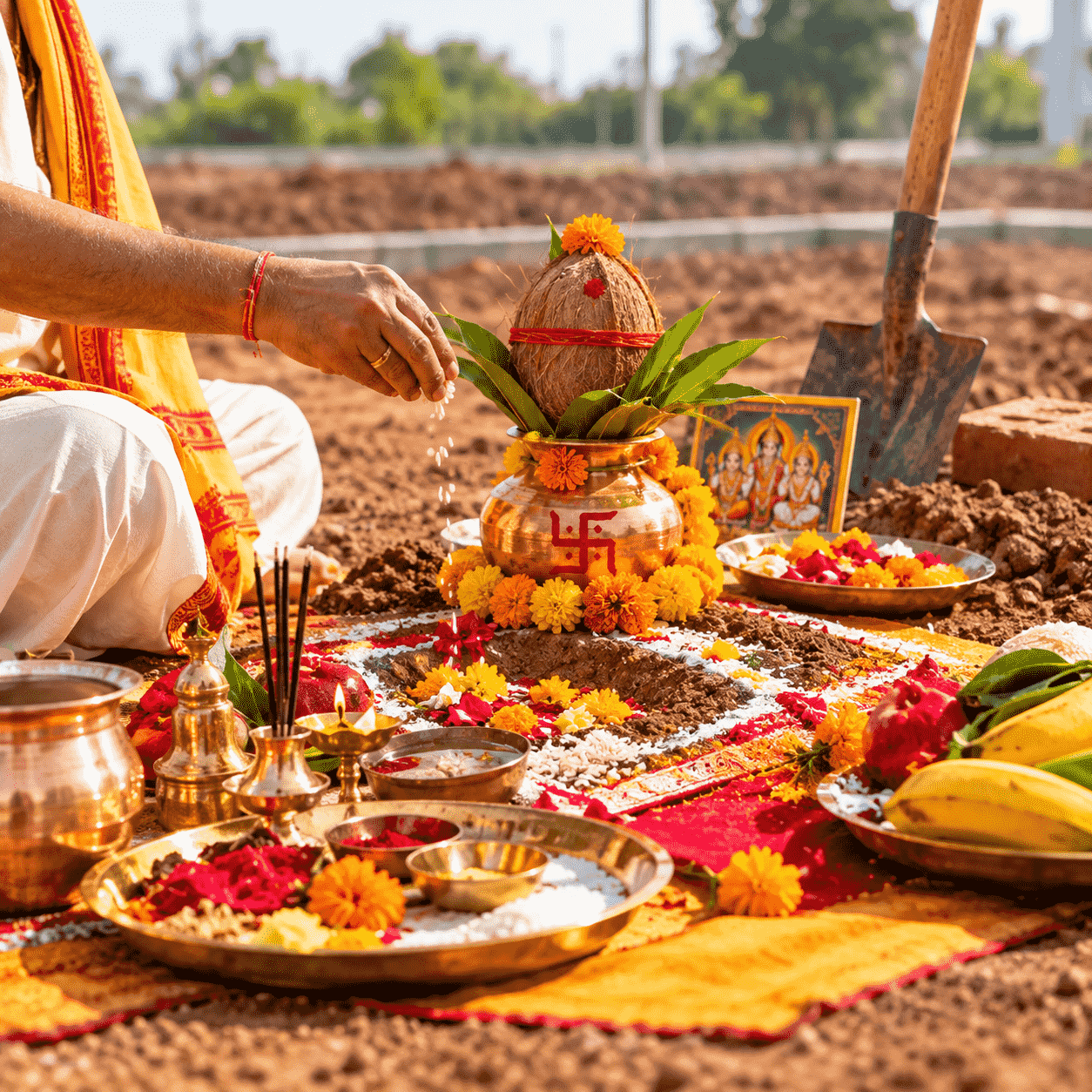
Bhoomi Pooja: Importance, Benefits and When It Is Performed
Starting construction on a new home, office, shop, or other property is an important milestone for many families. In Hindu traditions, Bhoomi Pooja is a traditional ceremony performed before construction begins as an expression of respect and gratitude toward Mother Earth.
The ceremony is performed with prayers, sacred offerings, mantras, and traditional rituals. Many families choose to perform Bhoomi Pooja before laying the foundation of a new property.
What Is Bhoomi Pooja?
Bhoomi Pooja, also known as Bhumi Pujan, is a traditional Hindu worship ceremony dedicated to Bhoomi Devi, or Mother Earth.
Before beginning construction, devotees seek blessings and offer prayers as a symbolic way of asking for permission and expressing gratitude to the Earth.
The ceremony may include a kalash, flowers, fruits, grains, diya, sacred water, and other pooja samagri. The exact rituals and items can vary according to family traditions and the priest performing the ceremony.
Why Is Bhoomi Pooja Performed?
Land is considered sacred in many Indian traditions. Bhoomi Pooja provides an opportunity for families to begin a new construction project with prayer and devotion.
Some common reasons for performing Bhoomi Pooja include:
Beginning construction of a new house
Starting construction of a commercial property
Performing foundation-related rituals
Seeking divine blessings for a new beginning
Expressing gratitude toward Mother Earth
Following family and religious traditions
Beginning an important project in an auspicious manner
When Is Bhoomi Pooja Performed?
Bhoomi Pooja is generally performed before construction work begins, particularly before foundation or excavation work.
Many families choose an auspicious date and time according to their religious and family traditions. The selection of the date and timing may depend on factors such as the location, type of construction, family customs, and guidance from a qualified priest.
Because traditions differ, it is advisable to consult the priest performing the ceremony when deciding the appropriate date and time.
Bhoomi Pooja Samagri
Preparing the required pooja samagri in advance can make the ceremony easier to organise.
Common items may include:
Kalash
Coconut
Mango leaves
Flowers and garlands
Rice
Fruits
Betel leaves and betel nuts
Diya
Cotton wicks
Incense sticks
Camphor
Sacred thread
Turmeric
Kumkum
Sandalwood
Grains
Havan samagri
Ghee
Sacred water
Cloth
Other traditional offerings
The exact samagri list can vary depending on the type of Bhoomi Pooja and the rituals being followed.
How to Prepare for Bhoomi Pooja
Good preparation can help the ceremony proceed smoothly. Before the scheduled day, families can discuss the complete requirements with the priest and arrange the necessary pooja samagri.
It is also useful to:
Select the date and time for the ceremony.
Confirm the priest and ceremony requirements.
Prepare the location where the pooja will take place.
Arrange the required pooja samagri.
Keep flowers, fruits, water, grains, and other offerings ready.
Make sure the family members participating in the ceremony are available.
Follow the priest's instructions for the traditional rituals.
Bhoomi Pooja for a New Home
For families building a new home, Bhoomi Pooja can be a meaningful first step in the construction journey.
The ceremony brings family members together for prayer and creates an opportunity to begin the new chapter with faith and devotion.
Many families also perform other traditional ceremonies at different stages of building or entering a new home. The exact rituals depend on individual traditions and religious practices.
Importance of Pooja Samagri
Pooja samagri plays an important role in traditional Hindu ceremonies. Each item used during a ritual has its own traditional purpose and significance.
Preparing the samagri beforehand helps ensure that the priest can perform the required rituals without unnecessary interruptions.
If you are arranging a Bhoomi Pooja, it is recommended to ask the priest for the specific samagri list required for your ceremony because requirements can vary.
Book Bhoomi Pooja Services
Planning a Bhoomi Pooja can involve several arrangements, including selecting the appropriate ceremony, arranging a priest, and preparing the required samagri.
POOJASERVICE.COM aims to make traditional pooja services convenient and accessible for families planning important religious occasions.
Whether you are starting construction of a new home, office, shop, or other property, you can explore Bhoomi Pooja services and arrange the ceremony according to your requirements.
Begin Your New Journey With Faith
A new construction project represents an important beginning for a family. Bhoomi Pooja allows families to mark this beginning through traditional prayers, devotion, and gratitude toward Mother Earth.
With proper preparation and guidance, your Bhoomi Pooja can be a meaningful part of the journey toward your new home or property.